Paris Art Week:
a stance, not a trend
Design Miami Paris, Thema and a few showrooms: a week to remember that luxury has never been tame.
One week, two fairs, a handful of addresses
Every year in late October, Paris draws together art and collectible design at their most exacting. This year, Design Miami Paris settled into the Hôtel de Maisons, Thema brought together artists and workshops, and several showrooms opened their doors.
We did not go looking for trends, but for pieces that take a stance. Four ways of doing so stood out.
Coral beneath the boiseries
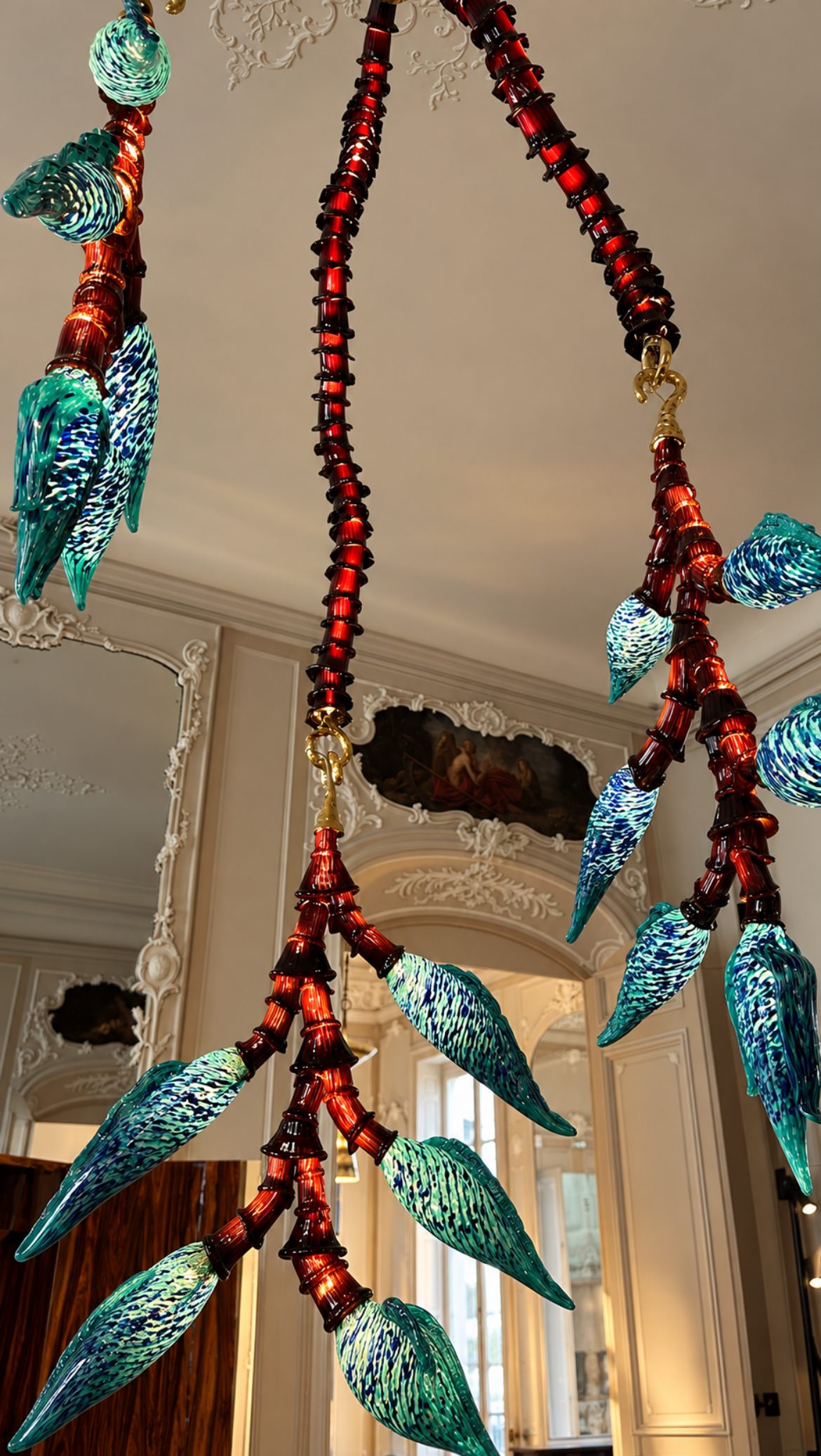
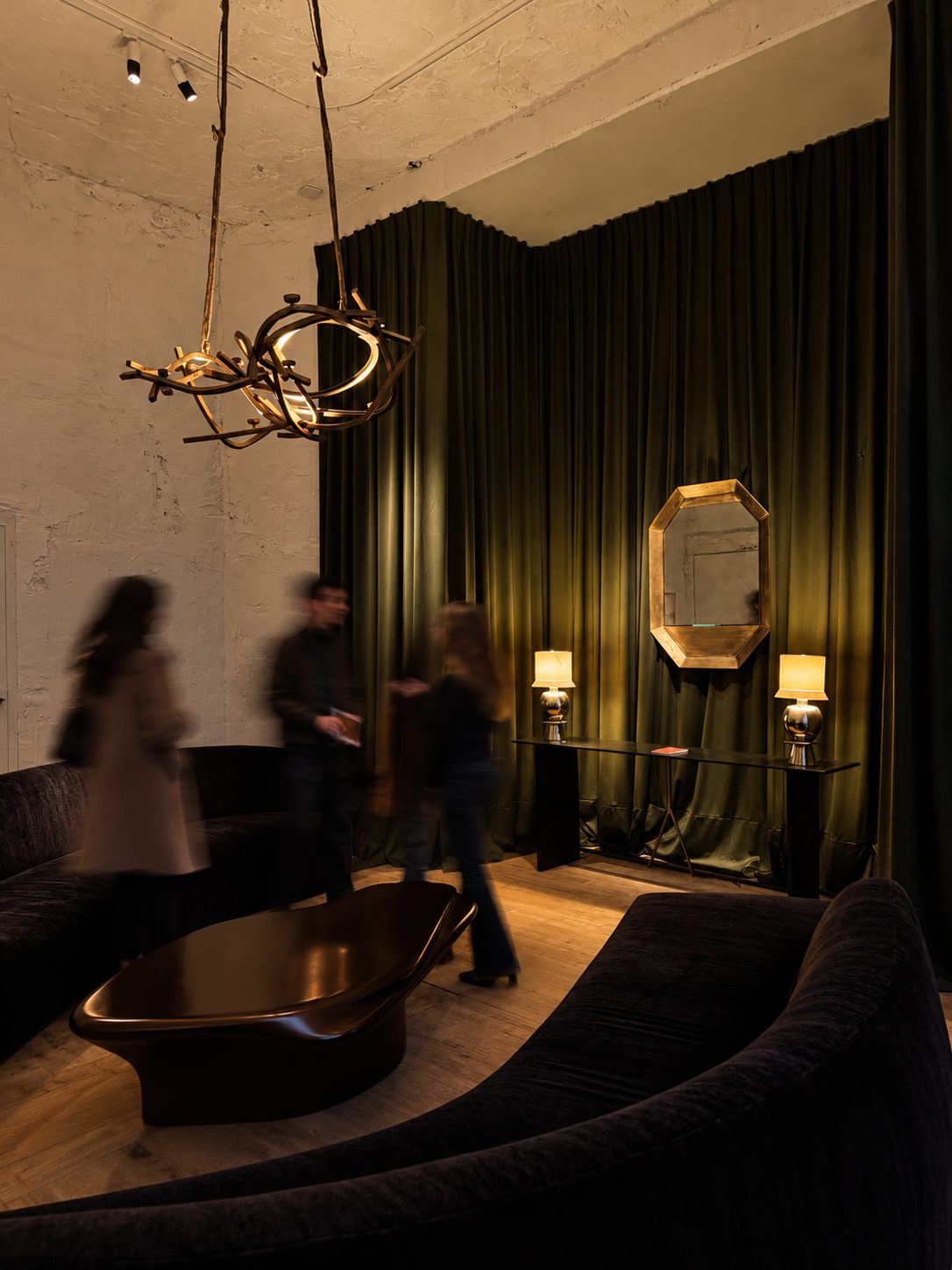
At the Hôtel de Maisons, Nilufar made a chandelier its centrepiece. Designed by Christian Pellizzari and hand-blown in Murano, it descends from the ceiling like a branch of coral and glass, and the whole salon begins to gravitate around it. Beside it, StudioDanielK's Jóia Para-Bar, designed for the gallery and made in Italy, is both a folding screen and a private bar: bronze, parchment and rosewood, in an edition of six.
In the garden, Galerie Patrick Seguin rebuilt Jean Prouvé's 6×6 Demountable House, lived in the Japanese way. A house born of the emergency of 1944, facing the hôtel's eighteenth-century façade.
Contrast makes no apologies. It stands its ground.
Copper, brass, liquid bronze
What stops us is often the trace of the hand. At Morentz, Paul Evans' Patchwork sideboard, circa 1970, pieces together copper, bronze and pewter, hammered sheet by sheet. Mats Theselius' Rörligt Objekt screen raises its patinated copper panels, and Carlo Scarpa's ondulato wall light for Venini filters light through rippled Murano glass. Three eras, one standard.
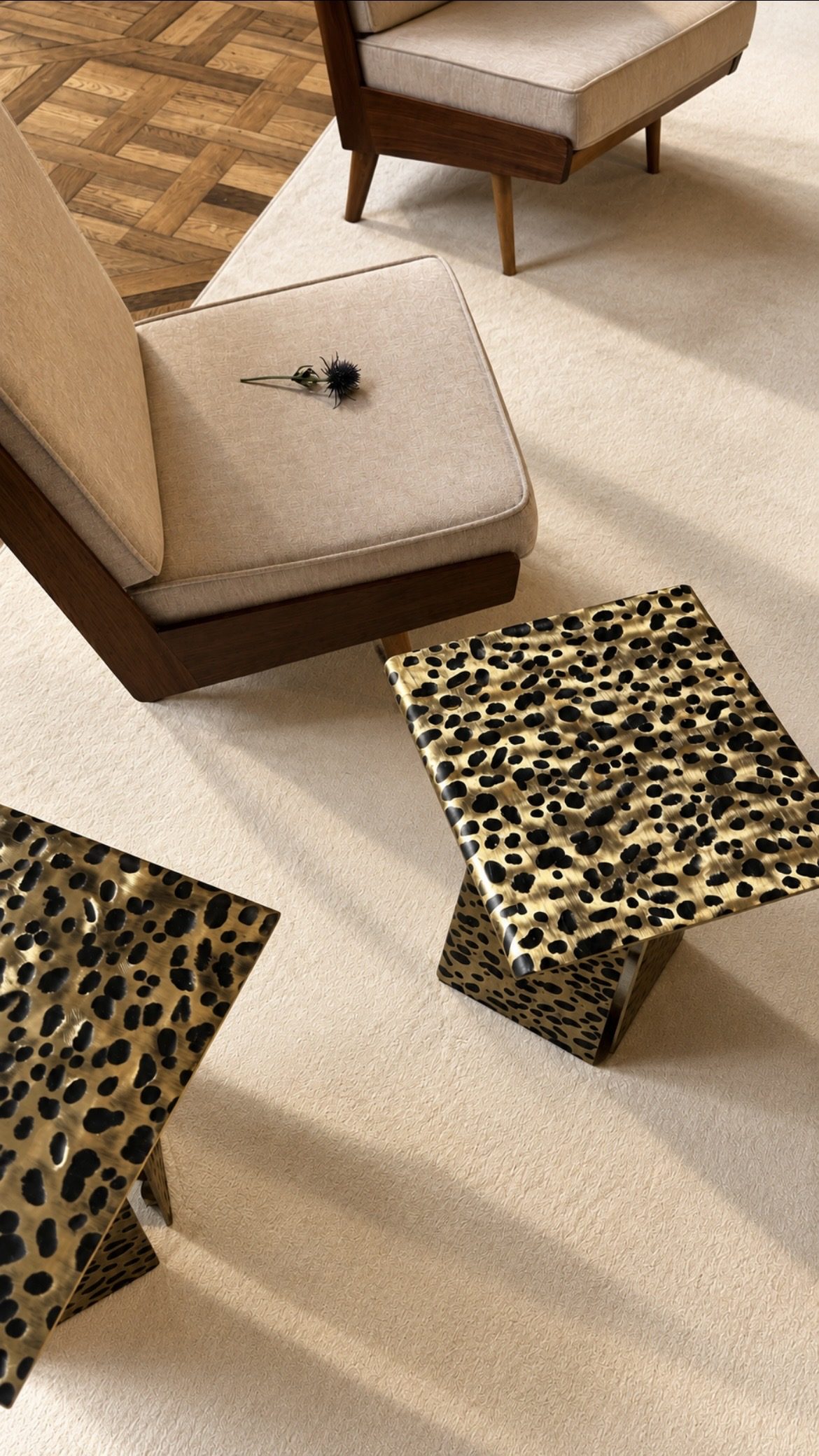
At Kreo, the Arc-en-Ciel console by Élisabeth Garouste and Mattia Bonetti recalls the freedom of a vocabulary at once erudite and joyful. Jean-Baptiste Fastrez's Leopard side tables take the game further: on hand-worked brass, the patina settles in the hollows and brings out the spots.
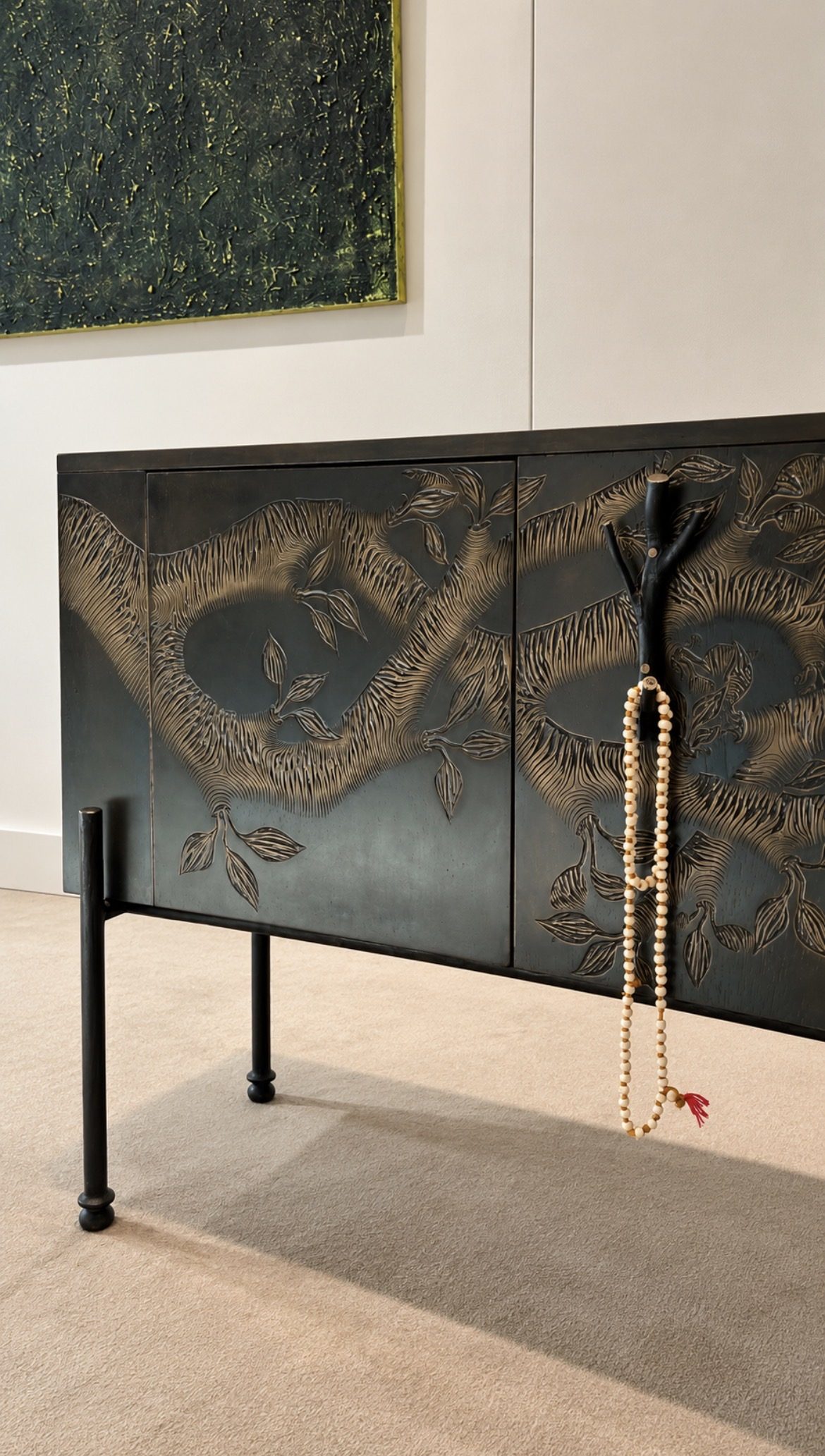
At Thema, Zoé Ouvrier carved a large pattern of branches across the doors of a sideboard, which Arik Levy then coated in liquid bronze. And at Scène Ouverte, Silver Sentimenti, who worked in haute couture before returning to ceramics, braids clay into herringbone, as one would a fabric.
Without craft, daring would be mere effect.
Time, and the sky
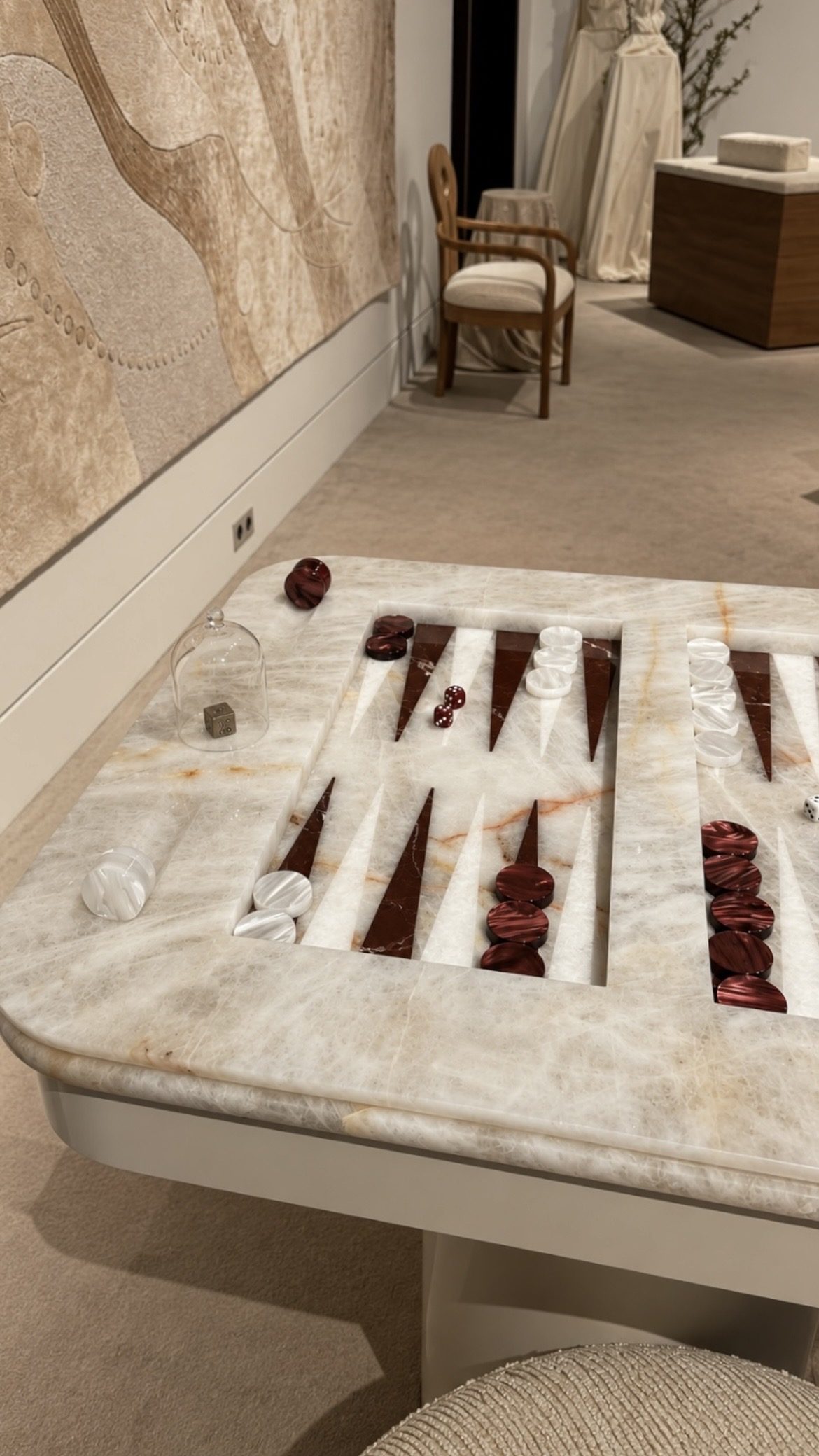
Our discovery of the week was at Thema, with Aline Erbeia. Her Éphéméride backgammon table turns the game into a measure of time: twenty-four points for the hours, thirty checkers for the days of the month, dice for the unexpected. Its Cristallo Pink top, inlaid with Rosso Lepanto and Bianco Neve, composes a mineral landscape.
Time for the table, the sky for her Nébuleuse armchair: a sun embroidered by Maison Lesage on the backrest and, on the reverse, oak marquetry radiating from a single point, like the birth of a star.
A form catches the eye. An idea holds it.
A sheep, a building site
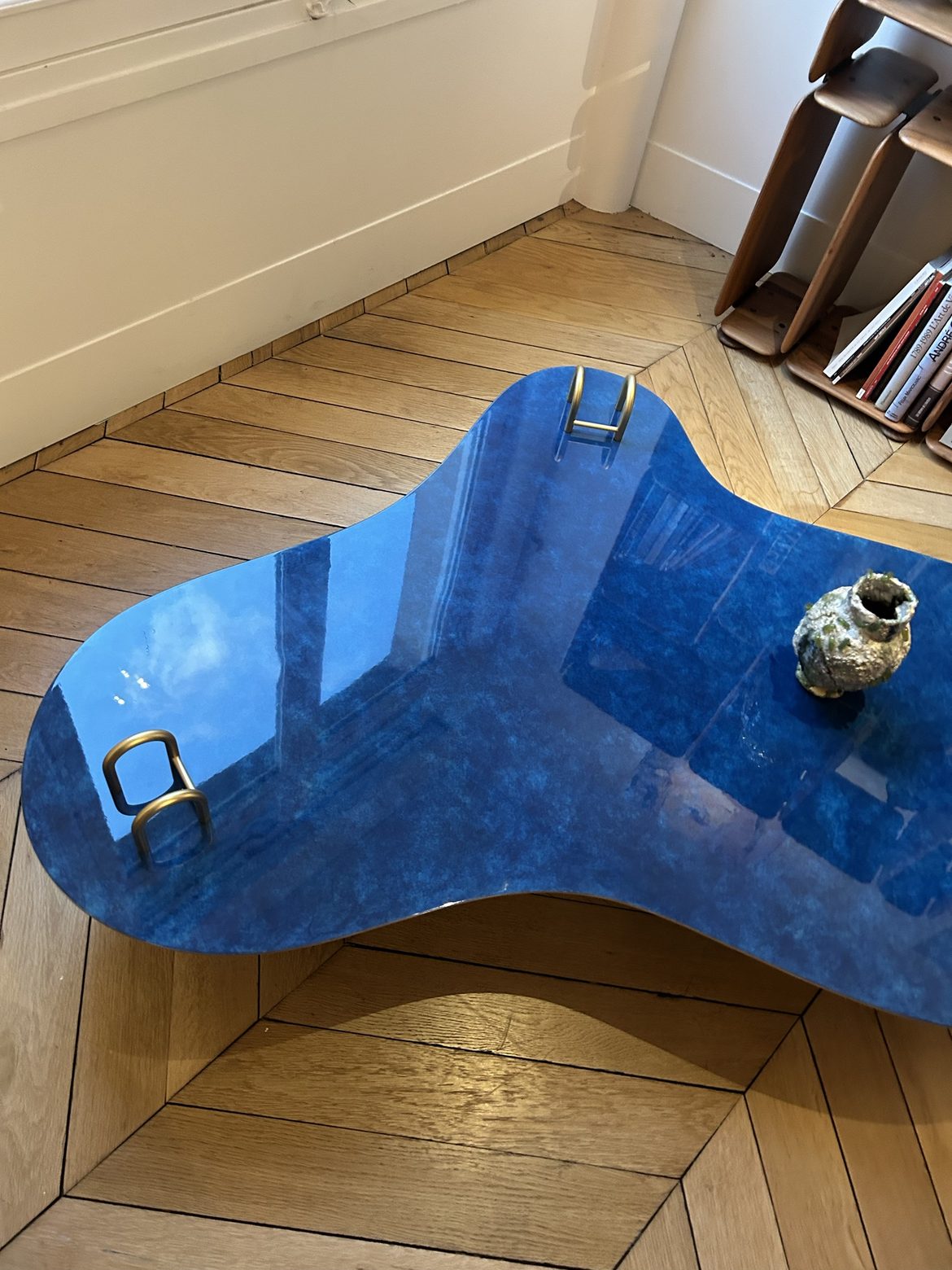
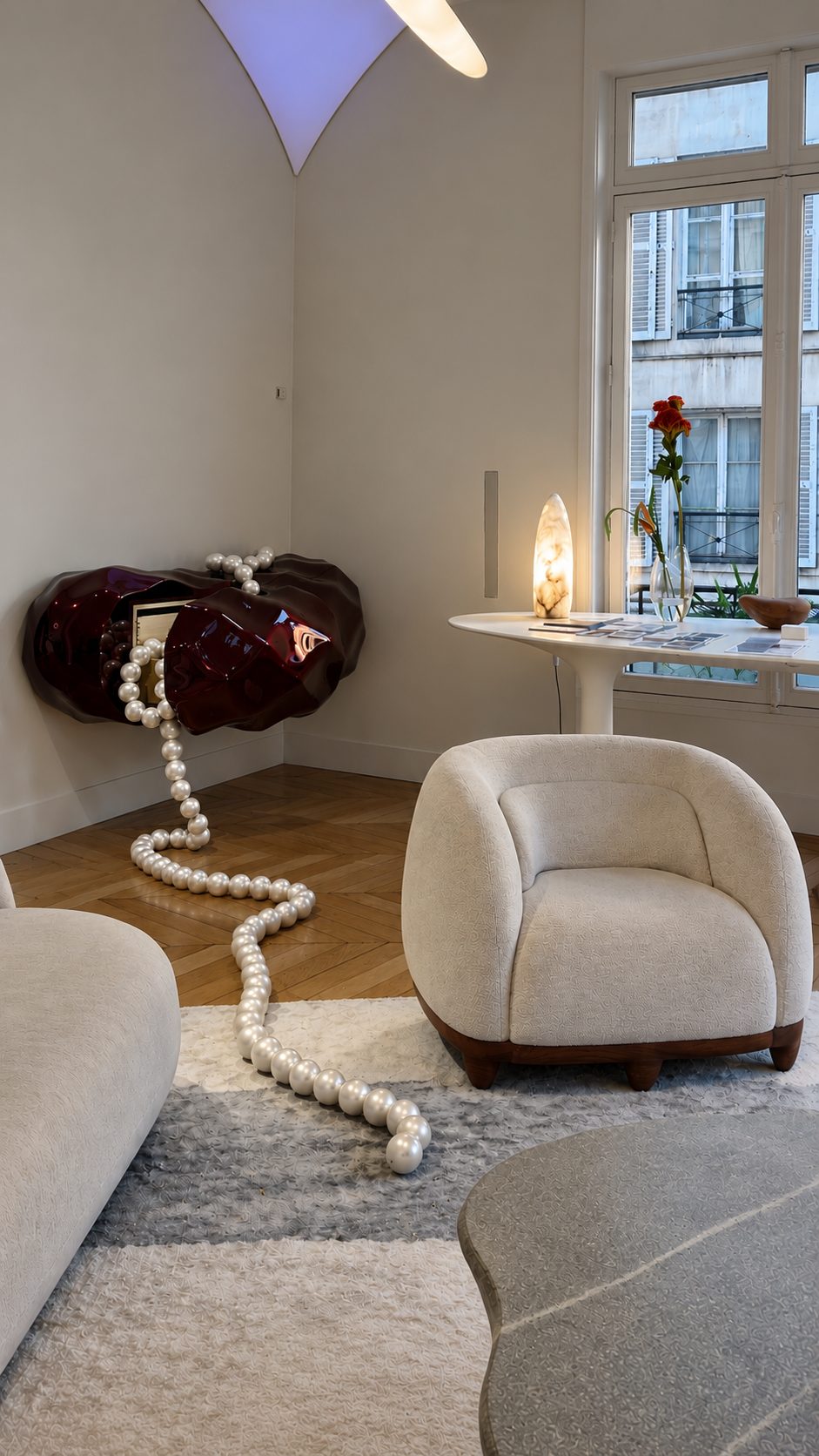
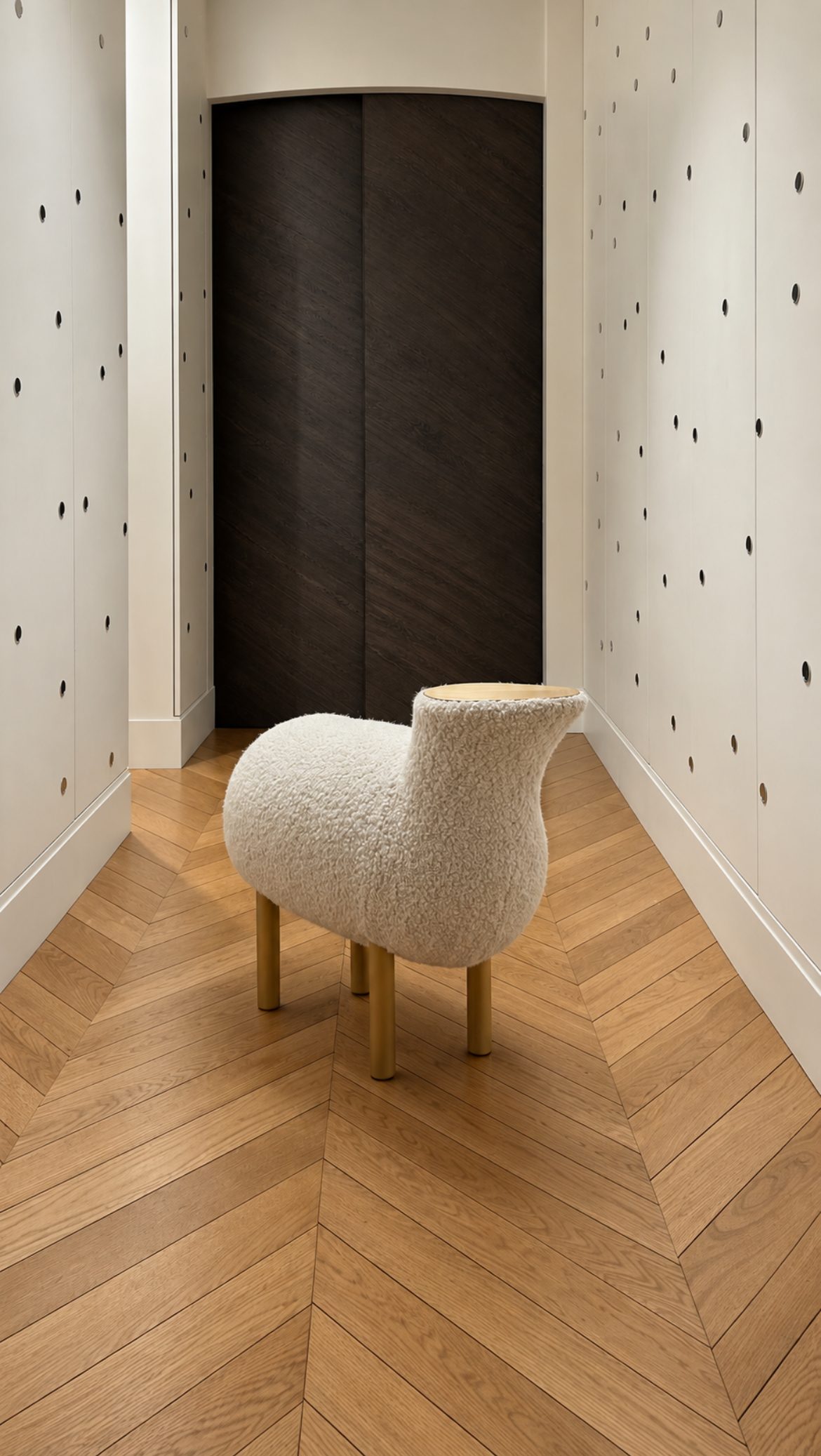
In the showrooms, daring changes tone. At Franck Genser, it speaks through humour: Piscine coffee tables with their brass pool ladders, a giant pearl necklace spilling from a lacquered sideboard, a sheep standing in for a side table. And the whole remains perfectly elegant: white walls, organic forms and lights designed for the space give every piece room to breathe.
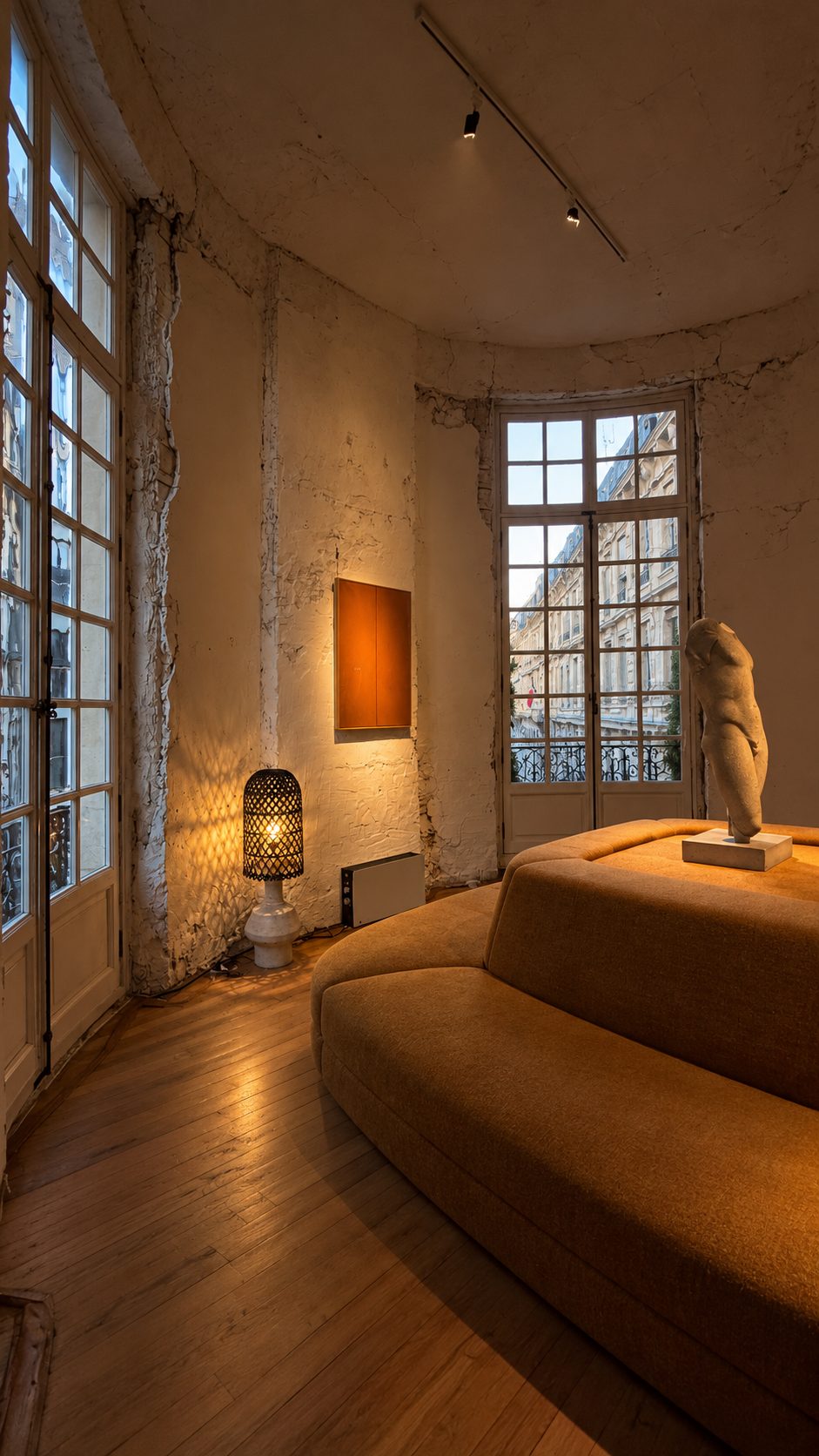
Charles Zana, for his part, opens his future Right Bank showroom before the works begin. Against the bare plaster and peeling walls seen on our cover, he has set a long table, a round sofa and antique sculptures. Raw walls, sublime pieces, and the urge to imagine the place with him.
Elegance needs to be neither serious nor finished.
Choosing, in three steps
A chandelier that sets a whole salon in orbit. An emergency house facing an eighteenth-century façade. A sheep in a showroom, a building site opened to visitors. Everywhere, the same lesson: a fine piece does not follow a trend. It takes a stance.
This is how we choose every piece.
First, a stance
One that catches the eye and holds a space, the way Christian Pellizzari's chandelier holds the salon at the Hôtel de Maisons.
Then, craft
The kind you read in the material, and that promises to last: Paul Evans' hammered copper, the patina of the Leopard tables.
Finally, the right place
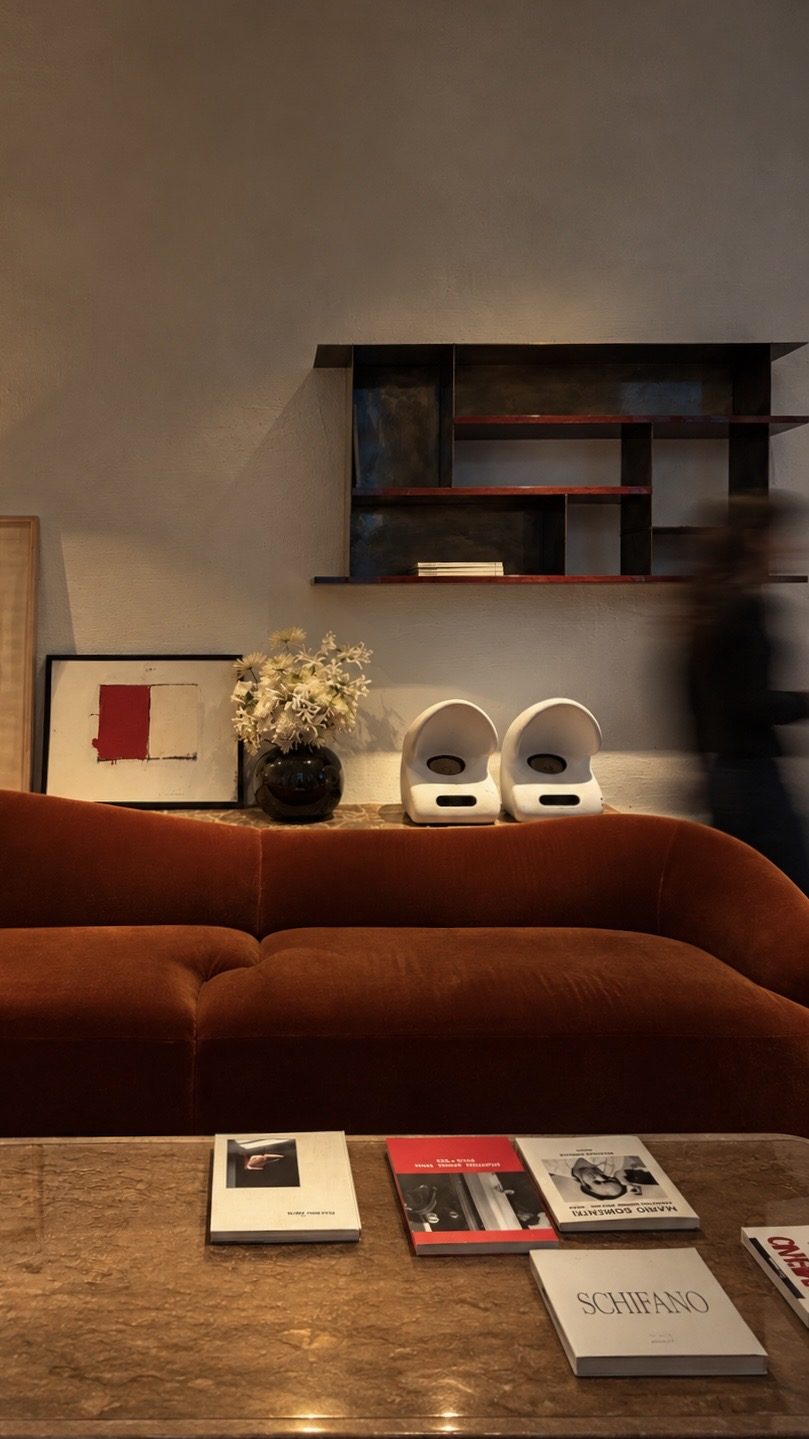
A piece is not set down in a room: the room is composed around it. At a talk at the Rice Global Paris Center, architects Troy Schaum and Michael K. Chen made the same point: sometimes architecture has to step back, so that art can take its full place.
Luxury has never been tame.
Alessia Camosetti, Setti
For interiors that tell your story, your travels, your inspirations.
Curation, direct sourcing and project management. Selection on site, inspection before shipping, total confidentiality on sources. In Monaco or in Paris.