Bali, the Art of Welcoming
Workshops, materials and rituals : why Balinese houses welcome better than ours.
In Bali, you don't enter a house. You pass through it.
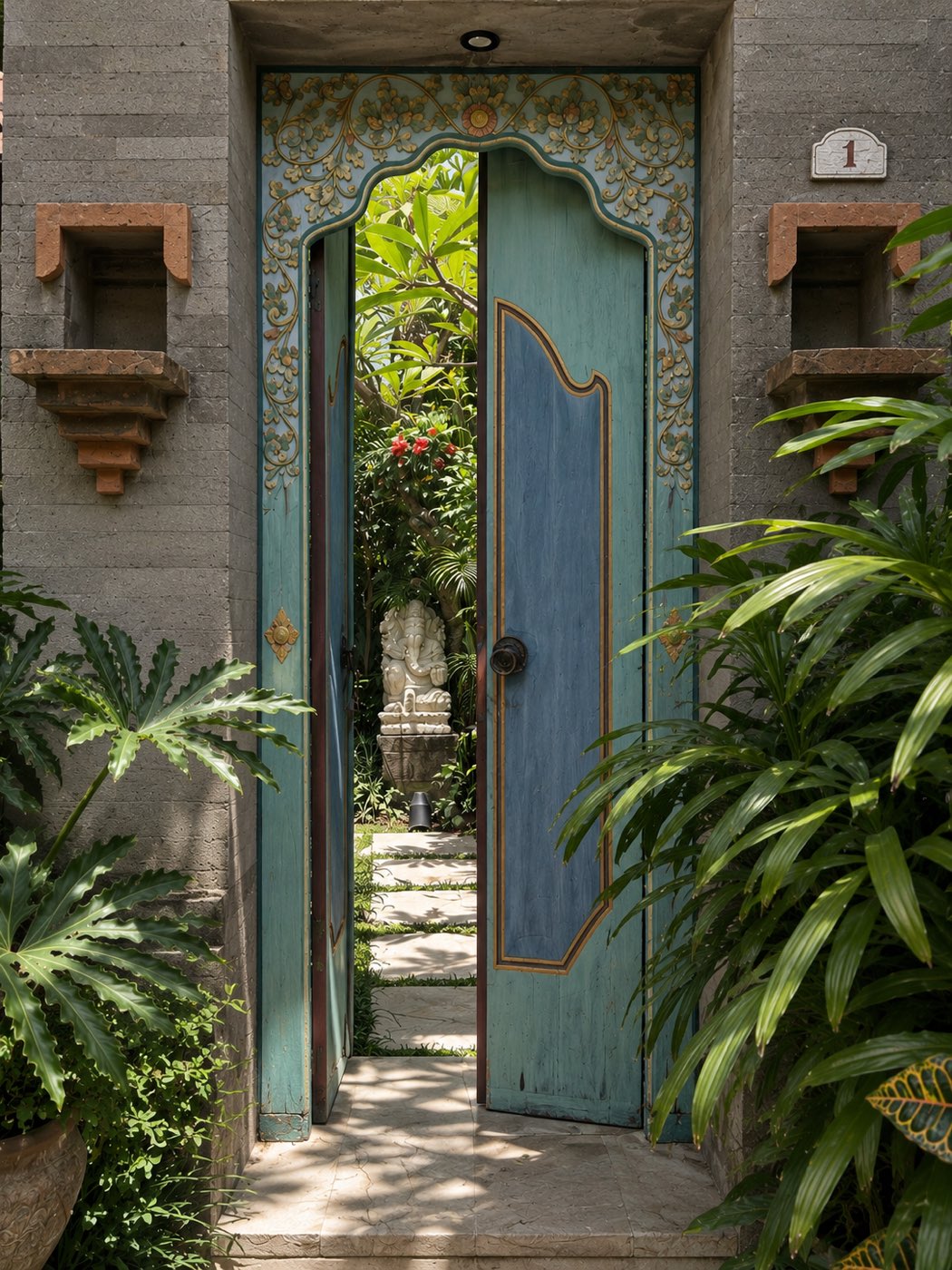
I was let in through a blue gate, at Aradhana Villas, in Canggu. Behind it, no room at all : a low wall set three paces back, the aling-aling, forcing you to step around it and slow down. A Ganesha waits on the axis. The house reveals itself through a sequence of courtyards, each a little more intimate than the last.
This layout is not an architect's intuition, it is a written canon, the Asta Kosala Kosali. It fixes the orientation, the hierarchy of courtyards, and proportions measured literally against the owner's own body : the span of a hand, the forearm, the foot. The master builder, the undagi, is as much priest as builder. Hence that sense that the heights are right, without knowing quite why.
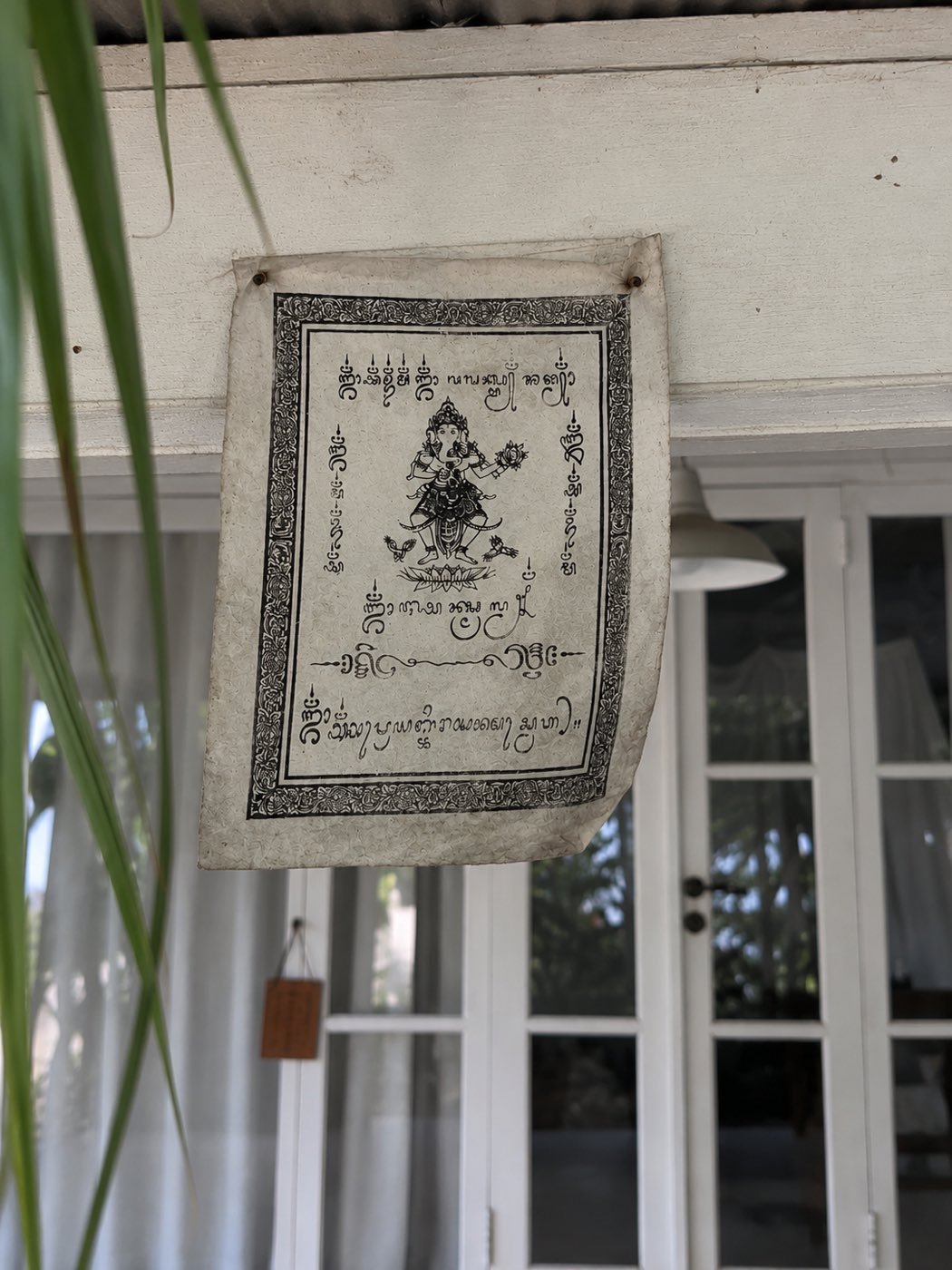
A carved panel reads like a painting.
I trained as an art historian, and that shapes what I read first. On the rerajahan just shown, a protective drawing nailed under the eave, it starts with the deity, a Ganesha, and with the fact that it was activated by a priest rather than signed by an artisan : protection, not authorship. The wooden objects for sale nearby ask a different question : not who blessed the piece, but who carved it, and when.
The market is full of new pieces cut from old wood. A nineteenth-century Javanese door and a 2015 reproduction share the same species, the same colour, the same smell. They do not share the same hand.
These objects are not signed : the carving is an offering before it is a commission. So you don't attribute to a name, you attribute to a village. Mas for figurative carving, Batubulan for stonework, Tegallalang for weaving, Tenganan for gringsing, Sidemen for silver.
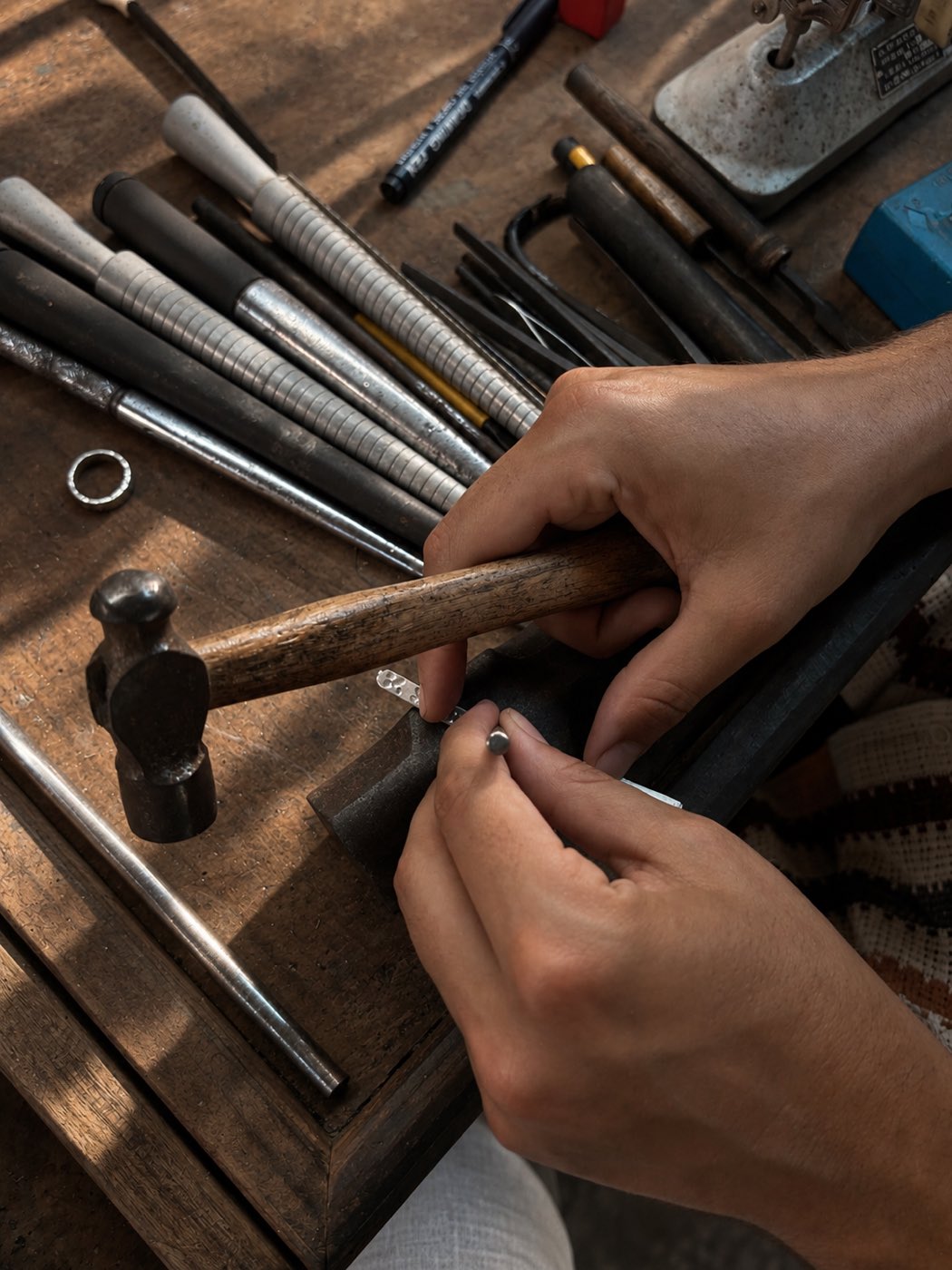
An hour at a workbench teaches more than a catalogue. The tools are arranged by use, not by size, the piece is held without a vice, regularity comes from the hand, not from a template. Which is also why no piece is identical to the next.
Teak owes its endurance to its silica and its oils : the only wood in the region that takes full sun and the monsoon without treatment, and that greys cleanly instead of breaking down. Suar, a kind of albizia, grows fast and wide, which is why you see those single-slab tabletops with such strong contrast between sapwood and heartwood. Batu paras, a volcanic sandstone, cuts soft and hardens in the air ; it takes on lichen within two seasons, which is exactly what's asked of it.
On the textile side, endek is the Balinese ikat, the kind of piece you now find well sourced at Threads of Life, the fair-trade gallery in Ubud. Gringsing from Tenganan is a double ikat, warp and weft dyed separately before weaving, several years per piece, one of only three such traditions in the world. It is the piece you search for, never the one you find.
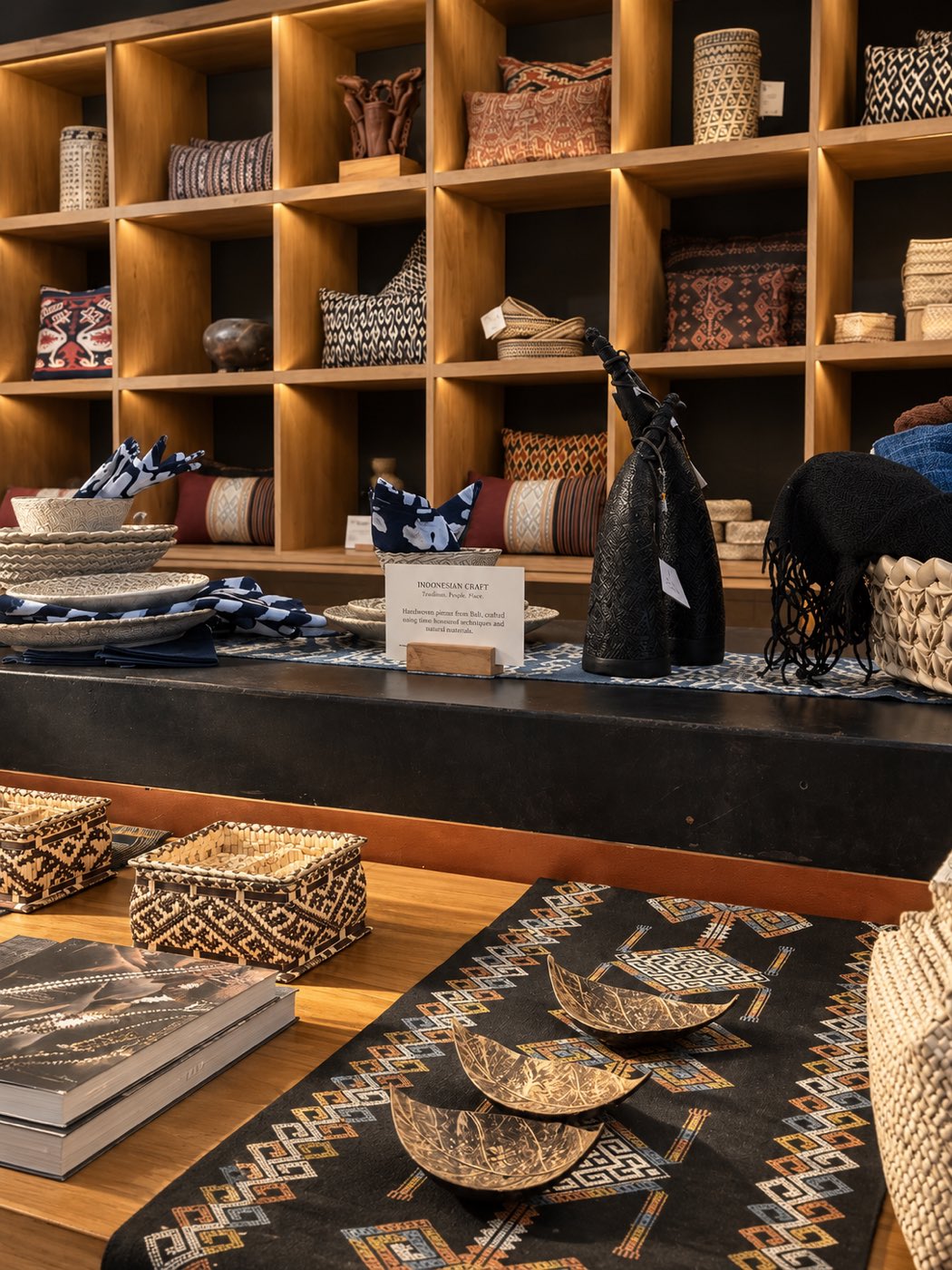
Wood dried in Bali settles around 12 to 15 % humidity. A heated Paris apartment runs at 8 %, sometimes 6 % in February. A door shipped without acclimatisation moves, then splits, often within the year.
So it is acclimatised for three to four weeks before installation, rigid fixings are avoided, and overly wide slabs are refused when the drying isn't documented. That's a sourcing decision, not a decorating one.
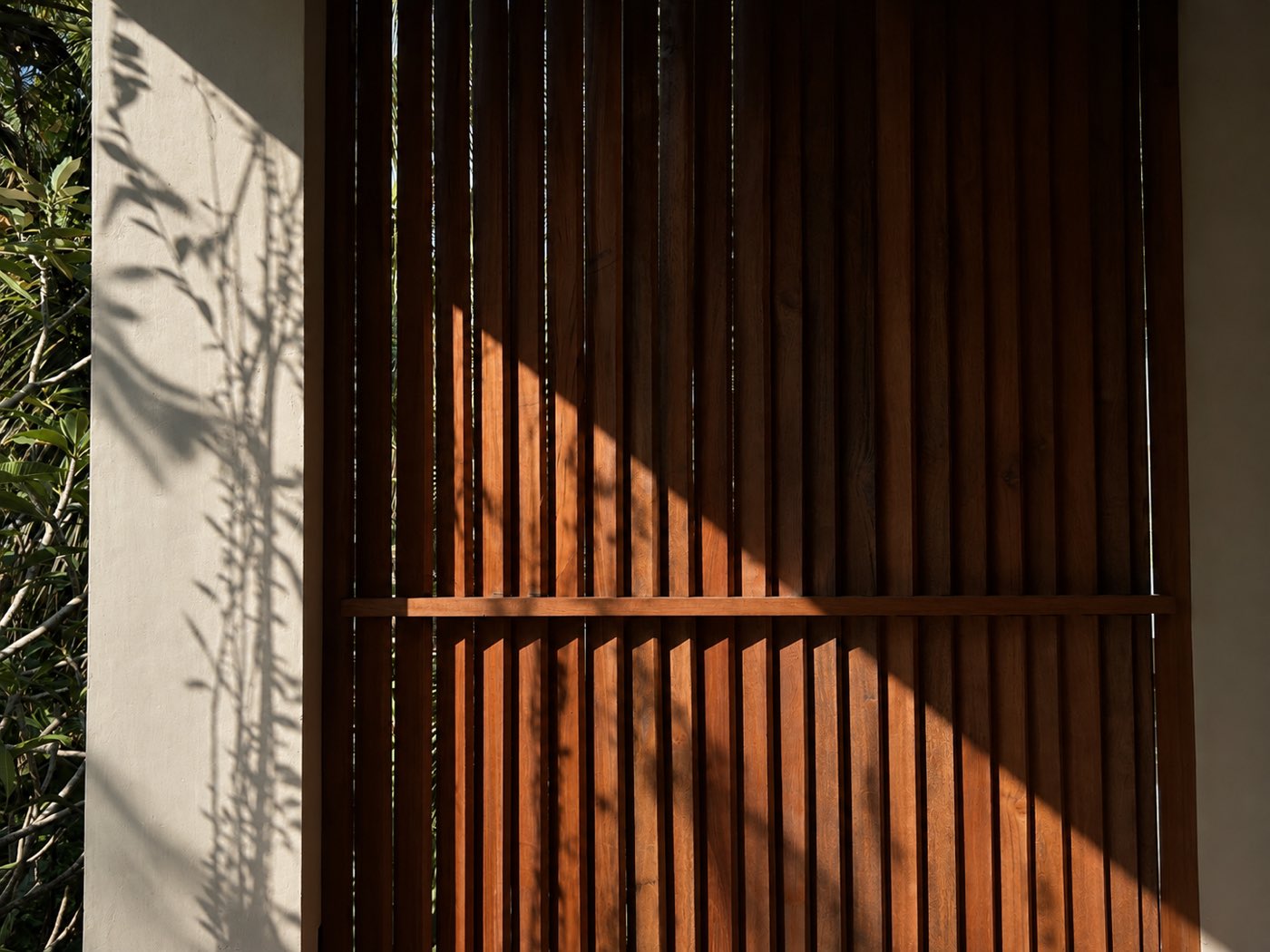
Five reasons their hotels succeed, where ours decorate.
-
i
You design a sequence, not a room
The arrival, the detour, the reveal. The pleasure lies in the journey, and it's designed before the volumes are.
-
ii
The programme is broken into pavilions
Each function gets its own roof, its own bale, an open-sided pavilion, around a courtyard. Circulation happens outdoors : no corridors, and service that passes unseen.
-
iii
Everything is built from the material of the place
Stone from the island, wood from the island, at the island's own scale. Nothing looks imported, so nothing will date.
-
iv
Imperfection is preserved
No surface is perfectly flat. Raking light catches the irregularities : these places photograph warm, where an interior corrected to the millimetre photographs cold.
-
v
The landscape comes before the building
Planting happens first, established trees are worked around rather than felled. The garden is ten years ahead of the masonry, and that head start can't be recovered after handover.
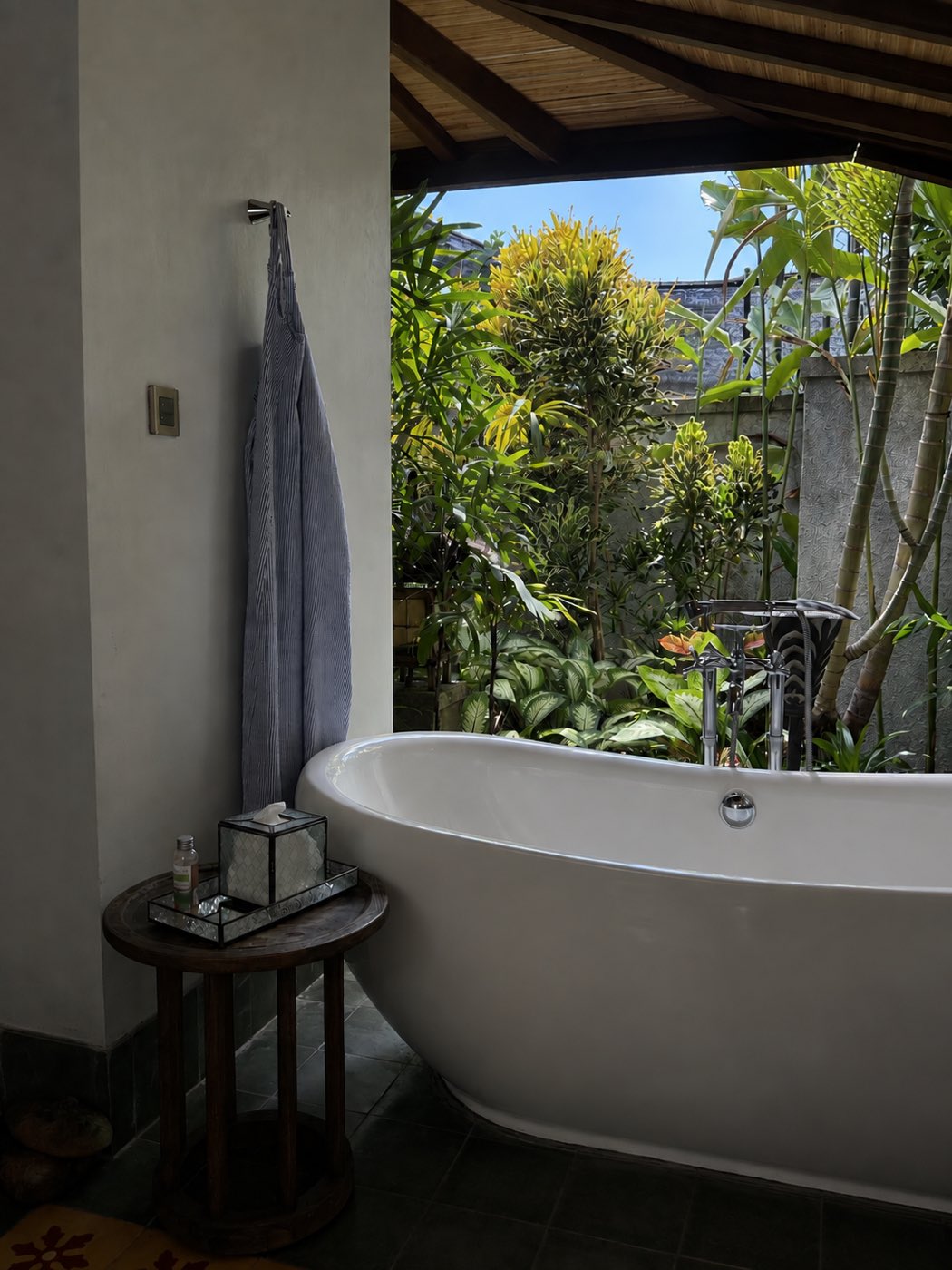
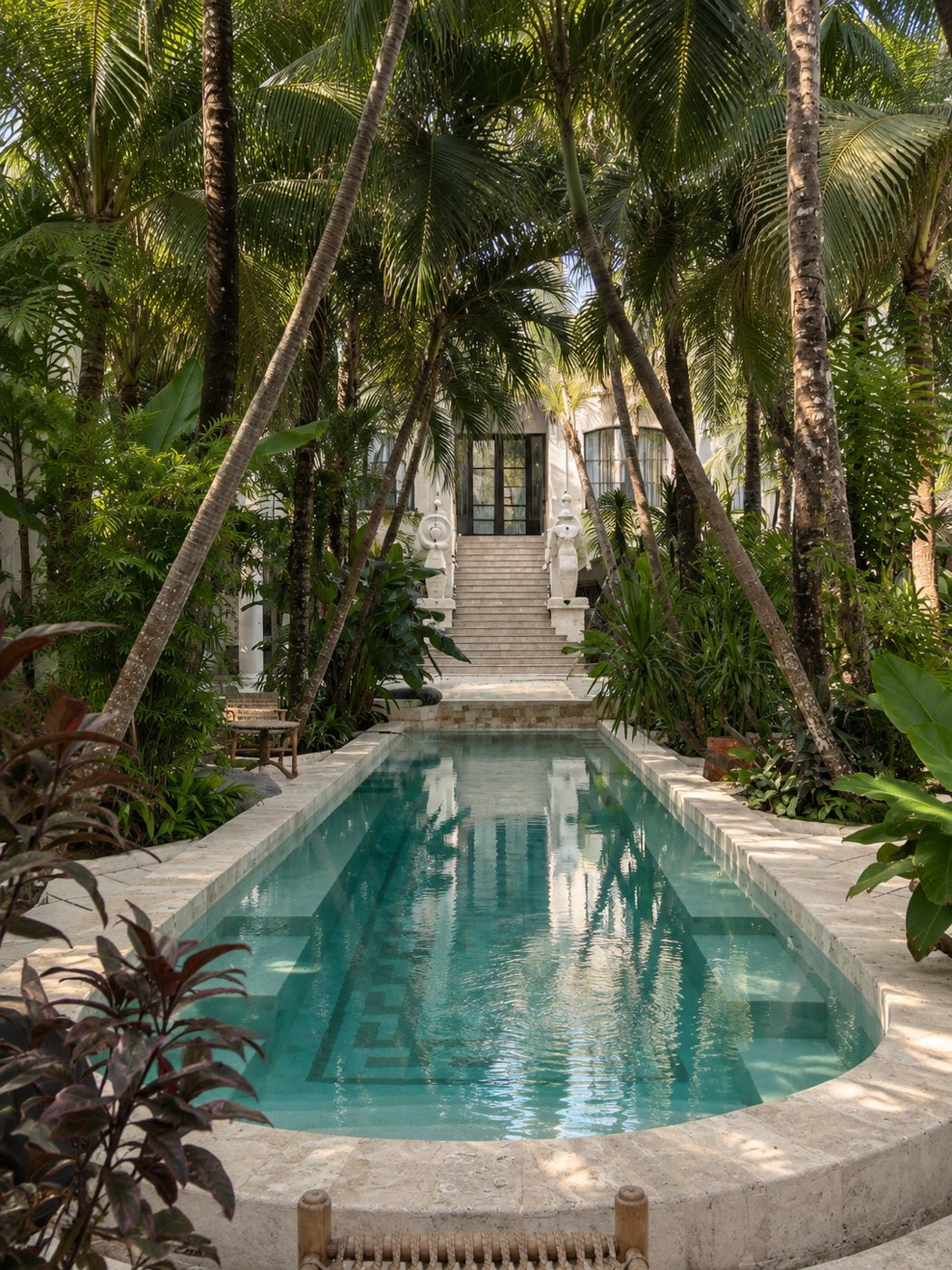
Luxury, here, is not visible from the street. It is discovered on foot.
Tri Hita Karana, the three causes of wellbeing — harmony with the divine, with people, with nature — is not a hospitality sales pitch. It is the framework that explains the house : the household temple occupies the courtyard's north-east corner, orientation governs the plan, ritual maintains the whole.
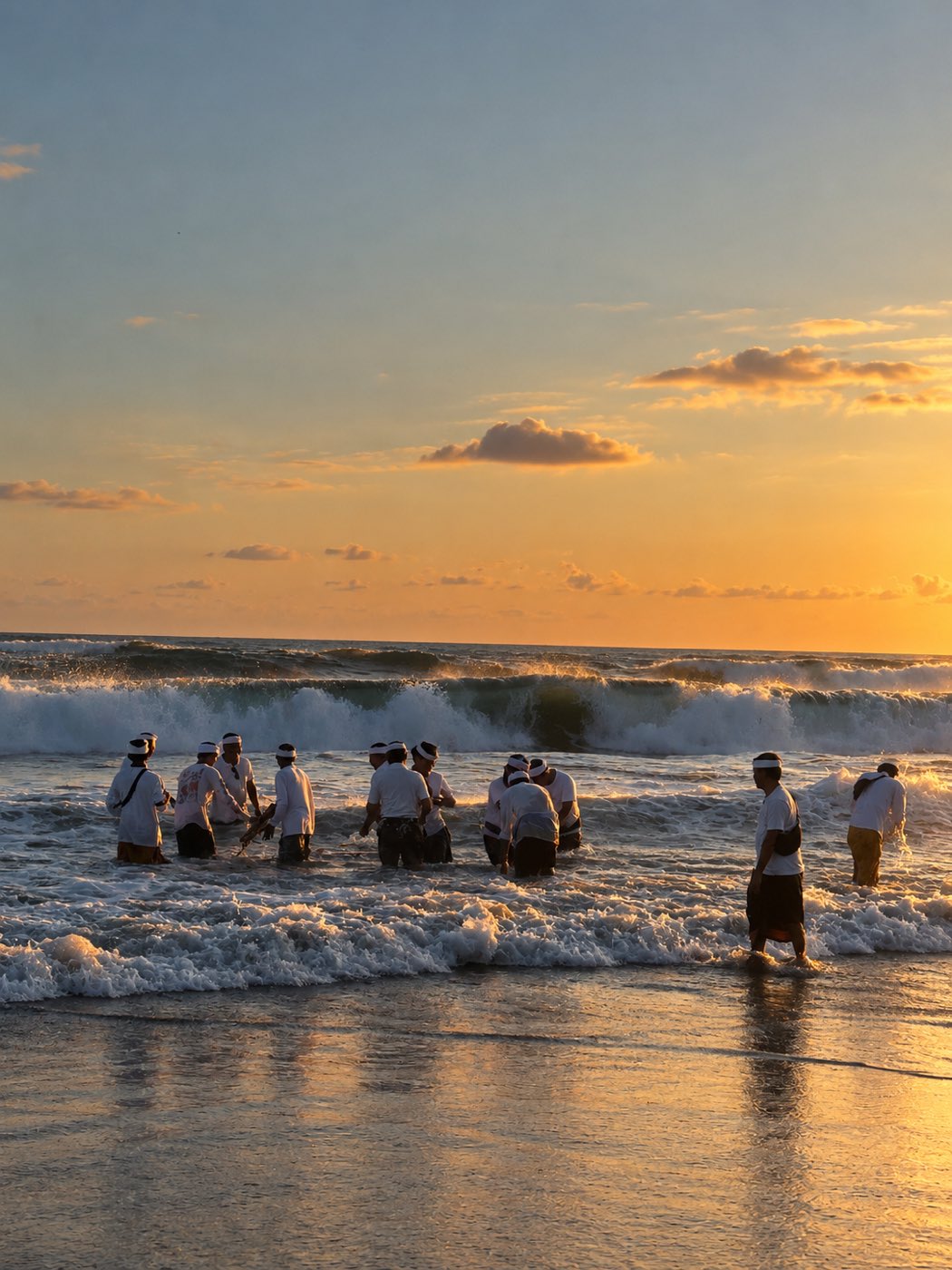
One morning in Canggu, a hundred people dressed in white walked into the waves in front of a sea temple, offerings in hand. That same day, every shop threshold had received its canang sari : woven palm leaf, flowers, a grain of rice, a stick of incense. Set down in the morning, left to the ants by evening, remade the next day.
None of this is done to be seen. That is precisely what separates a lived-in place from a decorated one, and no budget, however large, manufactures that difference.
Buddha heads : Bali is Hindu, the object is an export product. "Bali spirit" furniture mass-produced for Europe. New carvings aged with acid. Large suar slabs with no documented drying. And anything that comes out of a warehouse rather than a workshop.
Refusing is part of the work. It is arguably the main thing you are paying for when you hand me a sourcing brief.
Not a style. Bali doesn't travel : under a Riviera sky, carved teak and volcanic stone quickly become pastiche. What does travel is objects chosen one at a time, and four decisions. The sequence of entry. One strong piece rather than ten. Materials that accept time. The refusal of anything with no hand behind it.
The rest is a way of working : go and see, look closely, choose on site, inspect before shipping, acclimatise before installation. I am chosen for the eye, and the eye is trained at the workbench, not in a showroom.
Alessia Camosetti, Setti
For interiors that tell your story, your travels, your inspirations.
Curation, direct sourcing and project management. Selection on site, inspection before shipping, total confidentiality on sources. In Monaco or in Paris.